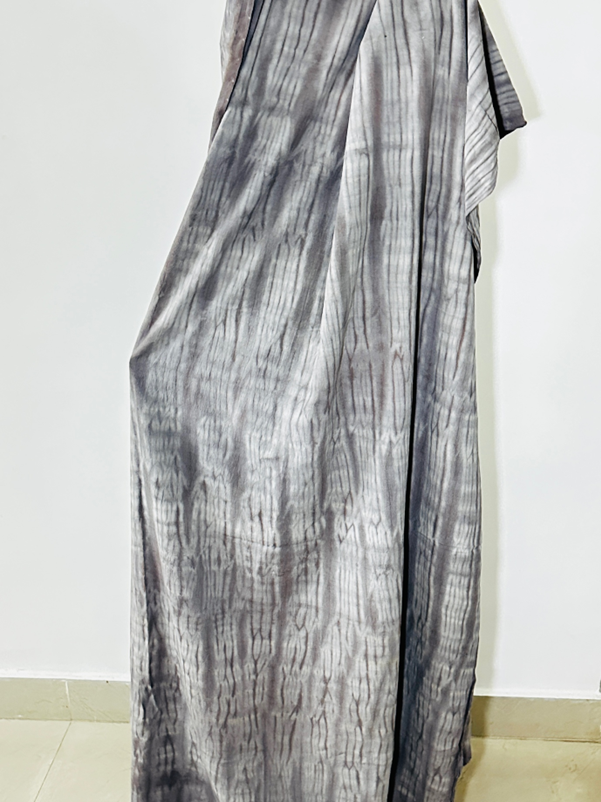
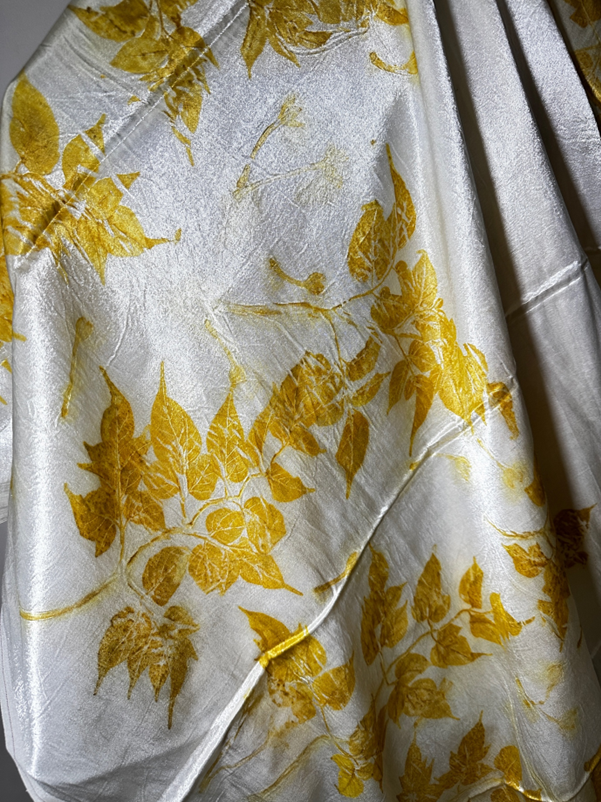
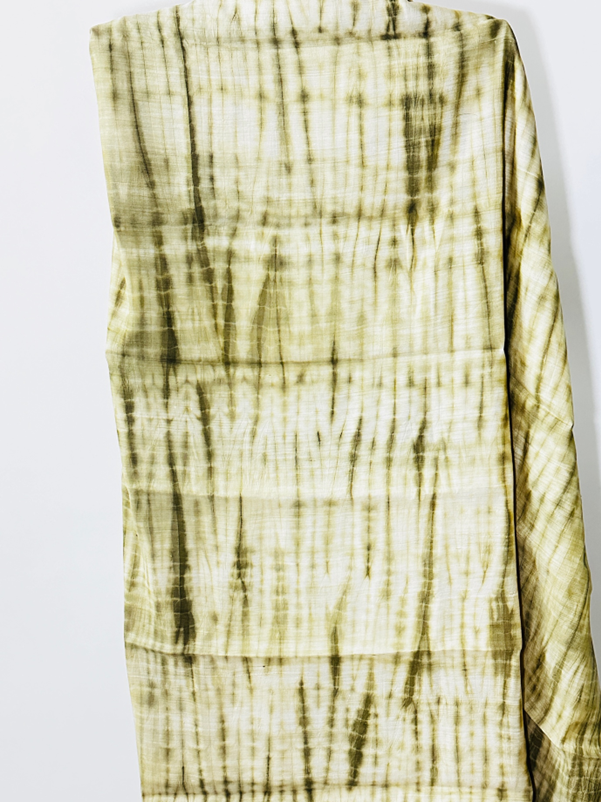
Eri Silk Fabric Dyed with Madder Using Stitch Shibori Technique
A Traditional Indian Textile Artistry
Introduction
Eri silk, often referred to as “Ahimsa silk” due to its non-violent production process, is a unique and sustainable variety of silk produced mainly in the North-Eastern regions of India, such as Assam and Meghalaya. Known for its soft texture, thermal properties, and creamy natural hue, Eri silk provides an excellent canvas for natural dyeing and resist-dyeing techniques.
Madder (Indian Rubab) as a Natural Dye
Madder, locally known as Indian Rubab, is a traditional plant-based dye extracted from the roots of the Rubia cordifolia plant. It has been used for centuries in India to impart rich shades of red, orange, and pink to textiles. Madder dye is prized for its colourfastness and earthy tones, making it a preferred choice for natural dyeing of silk and cotton fabrics.
Stitch Shibori Technique
Shibori is a Japanese term that broadly describes resist-dyeing techniques. In India, similar methods are practised and are commonly known as “Bandhani” or “tie-dye”. Stitch shibori, in particular, involves creating intricate patterns by stitching the fabric with thread and then pulling the threads tightly to gather the fabric. This gathered fabric resists the penetration of dye, resulting in beautiful, unique patterns after dyeing.
Step-by-Step Process: Dyeing Eri Silk with Madder Using Stitch Shibori
- Preparation of Eri Silk:
- Begin with a clean, pre-washed Eri silk fabric. Scour the fabric gently to remove any natural oils or impurities that might hinder dye absorption.
- Designing the Pattern:
- Using a needle and strong thread, hand-stitch patterns onto the silk. Common motifs include waves, circles, or geometric shapes. The stitches should be tight enough to gather the fabric when the thread is pulled.
- Gathering the Fabric:
- After completing the stitching, pull the threads to gather the fabric tightly. Secure the ends of the threads to keep the fabric bunched up. This creates the resist areas that will remain undyed or lightly dyed, forming the pattern.
- Preparation of Madder Dye Bath:
- Madder roots are cleaned, dried, and ground into a powder. This powder is then simmered in water to extract the dye. The dye bath is prepared according to the desired shade, with longer simmering and higher concentrations yielding deeper colours.
- Dyeing the Fabric:
- The gathered Eri silk is immersed in the madder dye bath. The fabric should be agitated gently to ensure even dyeing. Depending on the desired colour intensity, the fabric can be left in the dye bath for several hours.
- Rinsing and Finishing:
- Once the desired colour is achieved, remove the fabric from the dye bath and rinse it in cool water until the water runs clear. Carefully cut and remove the threads to reveal the resist-dyed pattern. Finally, the fabric is dried in shade to preserve the colour.
Features and Applications
The resulting Eri silk fabric displays a stunning interplay of madder reds and creamy whites, with intricate patterns unique to hand-stitched shibori. The natural sheen and drape of Eri silk, combined with the earthy tones of madder, make such fabrics highly sought after for sarees, stoles, dupattas, and home décor items. This technique not only celebrates Indian textile heritage but also supports sustainable and eco-friendly fashion.
Cultural Significance
The practice of dyeing Eri silk with natural dyes using resist techniques like stitch shibori reflects a blend of Indian and East Asian traditions. It preserves artisanal skills, promotes the use of indigenous resources, and appeals to those seeking environmentally responsible textiles. The motifs and patterns often carry symbolic meanings, adding further value to the finished product.
Conclusion
Eri silk fabric dyed with madder using the stitch shibori technique is a testament to India’s rich textile tradition. The process combines the softness and warmth of Eri silk, the vibrant hues of madder, and the artistry of resist dyeing, resulting in fabrics that are not only beautiful but also sustainable and culturally meaningful.